
The book and the film have always intrigued me (other than being far more meaningful and far more empowering than the other teen book and movie series at its time ...cough..Twilight...). I have found that I have grown with the story throughout my undergrad in Conflict Studies and Human Rights, minoring in Psychology. Suzanne Collins has woven quite a few parallels between the novel's political, social, cultural and environmental messaging to our own world's truths and realities pertaining to both historical and contemporary issues. The messaging is a reminder that truly history repeats itself if both citizens and governments do not hold themselves accountable. Despite our innovations, we continue to forget, dismiss the pleas that have always been there, and continue to be silenced. Just some themes I found to have stood out include: the effects of being under control of tyrannical oppression, the propaganda of keeping citizens dorment, the control of first world over third world states, the psychological effects of killing, how rebel and extremist groups form and the propaganda around it that labels whole groups as enemies. The conception of the arena and its dangers, the weapons, the different machines - all are very futuristic but not too unreal. Thus we can see a direct relationship with the real world, which makes the story even scarier and the criticism fiercer.
Having had Guatemala's history and contemporary issues fresh in my mind I must have been sensitive to any occurring similarities. I sat in the theater wondering if these citizens ever felt the empowerment to do the same, rebel again, or assassinate a president due to the continuous oppressive corruption and blatant disparity. For example, Katniss in Mockingjay at knife point exclaims: “We have either reason to kill each other...it just goes around and around and around...I am done being be pieces of his game. Why are you fighting the rebels, your family? These people are not your enemy. We have only one enemy, Snow. He turns the best of us against each other”.

So what really defines a radical or terrorist, like the Capitol labels to those who are so desperate for basic rights? It is now an open fact that it was the US CIA led coup to remove Guatemala’s hero presidents Juan Jose Arevalo (1945-1951) and Jacabo Arbenz Guzman (1951- 1954) because he was deemed a threat to US’s United Fruit Company. Companies as this were supported by the country’s authoritarian rulers and the US government through their support for labor regulations and massive concessions to wealthy landowners. After a series of authoritarian governments and great political instability, he was one of the most progressive presidents representative of the human rights and livelihood of his citizens, with sweeping social and economic reforms, including significant increases in literacy and a successful agrarian reform programs. See first hand footage in the film When The Mountains Tremble (Youtube FULL). No wonder much of the rest of the world is skeptical when all they see that human rights are the white and rich.

These progressive policies led the United Fruit Company lobbying the US government for their overthrow, and a US-engineered coup in 1954 ended the revolution and installed a military regime in its place. From that point on military governments took over, then sparking the brutal and genocidal 36 year Civil War (1960-1996) backed by the US military, the same one I helped uncover mass graves from! Catholic and California-based Evangelical churches had popped up, supported by the US government to preach “blessed be to those who suffer”. It was this ‘good-Christian’ mindset that the worst of the massacres, rape and genocides were conducted from Lucas Garcia (1973 - 1982) to General Rios Montt (1982-1983) including the scorched earth campaign, and the Plan de Sanchez massacre in Rabinal, Baja Verapaz of which I went to visit and heard the heart-wrenching recollections of locals there. Sponsored by the Roman Catholic Church, Israel, and Reagan government, Rios Montt, a former minister, his signature for his campaign was “ If you are with us, we’ll feed you, if you are not, we’ll kill you”.

Now, just think on that for a minute: the height of the Cold War paranoia, not only is the government saying they will kill you, but just how do you think they decipher as an ‘enemy’? On what grounds? Let me just tell you, there was no such consideration as a fair trial for justification of gunning down hundreds and thousands of men, women and children. On December 4, 1982 Reagan declared, “ President Rios Montt is a man of great passion personal integrity and commitment...I know he wants to improve the quality of life for all Guatemalans and to promote social justice”. Much like the praising relations with Hitler just before the war, Reagan even claimed Guatemala’s human rights conditions were improving and used this to justify several major shipments of military hardware to Rios Montt: $4 million in helicopter spare parts and $6.3 million in additional military supplies in 1982 and 1983. The decision was taken in spite of records concerning human rights violations, by-passing the approval from Congress. These records included 1982 Amnesty International report estimated that over 10,000 indigenous Guatemalans and peasant farmers (most of the demographic) were killed from March July and that 100, 000 rural villagers were forced to flee their homes. Estimates of over tens of thousands of non-combatants were killed by the regime’s death squads in the subsequent eighteen months. At the height of the bloodshed under Rios Montt, reports put the number of killings and disappearances at more than 30,000 per month. These deaths would include the thousands of women abducted and taken into the military camps, repeatedly raped, then killed and buried in mass pits like the recent Sepur Zarco case. With just a little US propaganda about removing Communism in the name of ‘democracy’ to keep other countries happy, the government and this corporation could do what they pleased, and the rest is history after repressive after repressive leader. It makes me sick to know how many wars, genocides and endless human rights violations around the world through proxy wars as Latin America, Vietnam and Laos. And the reality is that all the hundreds of thousands of individuals who were labeled Communists, in order to justify their violent deaths, where individuals who half the time had no idea what the term even meant, rather just families like you or I. Therefore whenever I hear that name in the media, news or conversation I remind myself to question just what exactly you are using that label for and what are the root causes. Do you feel comfortable everything you hear? We fight a war against terrorism while our own money funds their gun supply.

As I hear the repeated phrase of “Never Again” in The Hunger Games and our own history and media, I now cringe as it is used over and over while the same disparity continues over. Plutark letter at the end of Mockingjay critiques this : “Now we're in that sweet period where everyone agrees that our recent horrors should never be repeated," he says. "But collective thinking is usually short-lived. We're fickle, stupid beings with poor memories and a great gift for self-destruction. Although who knows? Maybe this will be it, Katniss."

To my horror after visiting the interactive exhibit in Guatemala City, Por que estomos? (Why are we the way we are?) Por una convivencia digna/ Internaitional Training Institute Training Institute for Social Reconcilliation and Centro de investigacianes negionales de mesoamerica, so many of these last couple generations since the Civil War (1960-1996) have little knowledge as to the extent their governments carried out mass killings on non-combatants as acts of genocide and crimes against humanity. Why? Because their governments and the powers of control continue to refuse to hold themselves accountable past to present as their research proves. And why is it now one of the most violent countries in the world? Because the powers that are supposed to be in support of citizens’ well-being including the justice system and police, are left alone in fear and distrust from all the impunity. The sad part is, that technically you can say, a tyrant is gone, but where is the repair? Why are those who are ‘elected’ in, continue to not take the responsibility to work on fixing the issues that were created in the first place. Conveniently, this information continues to be left out of the history books, continues to leave out any progressive dialogue and organizational funding for social support for the families lost and those now paying the ultimate cost. As a result, there are little effective measures to crack down on the reasons of the endless cycle of violence. Up until Canada’s recent Truth and Reconciliation Commission, the treatment of our own indigenous continue to mistreated, discriminated and refused equal social support as the rest of the population as we were left ignorant to the truths of history. The recent Attawapiskat suicides is just a glimpse that has been going on for years. Canada has also sent citizens to POW concentration camps during war times, has been quick to accept a label another as an enemy, as we have done to “communist” to “terrorist/guerilla”. Like the Hunger Games, the over-dramaticized shows, or the offensively shallow humour, we remain dormant; taken little social responsibility for the violence and discrimination which starts as a child is born. Just as Haymitch notes in Catching Fire: “They will continue to play your love story so people forget what the real problems are”.

">Democracy is never officially presented in the book as a model to follow. Collins goes beyond the simplistic and is not afraid to show the limits. From Winston Churchill’s “Democracy is the worst form of government, except for all the others that have been tried”, I am appreciative of this from the endless debates we had in classes on the pros, cons and challenges of democratically run states. Much of the academic discussions included how transitioning democratic models of government can be just as dangerous than per se a dictatorship, and the vast variety in whether a state will hold any amount of legitimacy and accountability (Goldstone, Jack). Collins addresses today’s people, those in power right now and the present population: “Everyone,” Plutarch tells him. “We’re going to form a republic where the people of each district and the Capitol can elect their own representatives to be their voice in a centralized government. Don’t look so suspicious; it’s worked before.” “In books,” Haymitch mutters. “In history books,” says Plutarch. “And if our ancestors could do it, then we can, too.” Frankly, our ancestors don’t seem much to brag about. I mean, look at the state they left us in, with the wars and the broken planet. Clearly, they didn’t care about what would happen to the people who came after them. But this republic idea sounds like an improvement over our current government.”

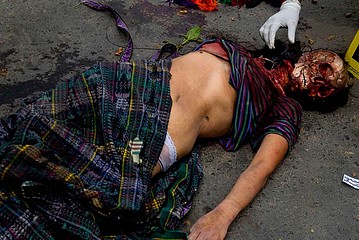
As vaguely hinted at in Mockingjay we can promise fairness and justice during, after rebellion, civil or ethnic conflict but most often the system and former political members have not just suddenly changed their values and methods of leadership from its history's dictatorship. So where do these former party leaders go? I’ll tell you. In Guatemala after the 1996 Peace Accord which in part, a Truth Commission was brought up, the military was disbanded. Then left jobless, they began to saturate into the police and justice system, taking on the same dirty work and bribery as they had learned in their previous career. These generations of police would continue to agree to bribes to let murderers discard of the evidence, not to mention the thousands of XX uninvestigated female femicide victims. Now there has been some international work such as with the Justice Education Society training in 2003-2011 with police and justice (see Most Violent Place on Earth film). Research and individuals on the ground as Christian Silva of EFI-IFIFT and the Instituto Nacional de Ciencias Forenses de Guatemala did express some positive outlooks on the newest generations of police and justice force but are still highly controlled from these ex-military. As a result, I now hold a critical eye on Peace Treaties and Peace Accords, even though they are the very thing I hope for during the war and terror of conflict. This just marks the very beginning of the work to come. Just like Snow’s white roses, I see the statues of peace hands erected all around Guatemala City and the fresh white roses placed in their Cultural Palace. I see the dissatisfaction and lack of legitimacy and accountability they represent to so many Guatemalans; a false hope.


Lastly on a more positive note, I would like to acknowledge the role Katniss plays in opening discussion for the reality of violence, corruption and the struggle of dealing with trauma. Katniss struggles with overcoming loss and the trauma she and those around her face. Katniss' voice of humanity and realism is so very refreshing; for once this narrative is not silenced by the glorification of war we see in far too many stories and dialogues. She shows us the emotional and physical pain, the trauma of violence of which the protagonist and those around her continue to struggle with. From this it opens up the discussion of post-traumatic stress disorder. PTSD is very real and a very real human response we see around the world, diagnosed or not, as Lt. Col. Dave Grossman writes in the novel I am reading On Killing: The Psychological Cost of Learning to Kill in War and Society. Just consider all the children who live though violence in domestic homes, interstate violence, ethnic conflict, the youth who are forced to kill their families and manipulated into killing machines or provide no other source of income other than join forces and destroy ‘another’ to survive or for a duty from a great threat to their nation. Some of these families I have met, all experienced serious trauma and after decades, still have little sense of closure. The character Gale, was so focussed on killing those of the Capitol, says sometimes “you gotta think that the killing is not personal." But, Katniss responds right back, “I of all people, know that it is personal". Seeing first hand the catastrophic effects of systemic fear, distrust, lack of proper support and social services, we need good reminders in our first world lives. As I sit in that Guatemalan theatre I wonder if at the ending scene they take her words to heart in dealing with and overcoming the pain of loss and trauma of violence, as the family we uncovered the mass graves of:

Furthermore, I want to discuss the real-world similarities around the centrality around Panem as a representation of just what first-world nations do to control of third-world countries. Just as we see the great poverty and abuse of the Districts in order to benefit of the first world in blinding ignorance, denial and desensitization of the real horrors of violence of the Hunger Games and the poverty of the Districts they live in, we see the glorified violence in our own games and entertainment. Guatemala, like the hundreds more countries that are pushed around and ‘raped’ of their resources, are without a fair payment, polluting and worsening corruption. And in most cases, these first-world countries like the US and Canada involve themselves calling it humanitarian aid or economic trade when their work contrary to our own Charter of Rights and Freedoms. In a recent New York Times article Guatemalan Women’s Claims Put Focus on Canadian Firms’ Conduct Abroad Mrs. Caal said, the men who had come to evict her from land they said belonged to a Canadian mining company also took turns raping her. After that, they dragged her from her home and set it ablaze. I soon found out this was not the only matter.
 |
| Ottawa artist Radchild Productions:http://radchildproductions.tumblr.com/ |
Just before the 2015 Canadian Elections I was presented to summarize a recently published book The Ugly Canadian: Stephen Harper’s Foreign Policy , by Yves Engler. To my horror I learned of Canada’s disgraceful relations to Central and South America. Chapter after chapter was documented evidence of just how many multi-disciplinary issues had seriously risen up under the Harper government, from the tar sands and environment, to the Arab Spring, bombing Libya, concerning relations with Israel, at war with Lebanon and Iran, the consequences of our militarism and promotion as a warrior nation, mining, and business above all else. As Englar expresses, “No matter how much Canadians wish we were simply known for hockey or our comedians, the mining industry increasingly represents Canada abroad...thousands of projects outside of Canada, displaced communities, destroyed ecosystems and provoked violence. Pick almost any country in the Global South - from Papua New Guinea, to Ghauna, Ecuador, and the Philippines”. To understand some of the unrest, on a pre-planned visit to Chiapas, Governor General Michaelle Jean and deputy minister Peter Kent were greeted with chants of "Canada get out". During a July 2007 trip to Chile PM Harper was greeted with signs stating "Harper go home" and " Canada: What's HARPERing here?" This has been because not only did the Harper government provide huge support for the large companies as Barrick Gold, the funds had been pumped through internship and development projects. In June 2011, CIDA announced. $6.7 million in funding, the biggest was between Plan Canada and IAMGOLD...."to respond to the needs of the mining company..that the number of Graduates are expected to go directed into jobs at mining company". The company's CEO warned miners "I have zero tolerance for strikers. I will not tolerate anything that is negative to our stakeholders.The other two NGO-mining company projects announced by CIDA, were $500000 to to project between World University Service and Rio Tinto AlCAN, then $500000 to World Vision Canada Barrick Gold projects. In response, Miguel Palacin, the head of a Peruvian indigenous organization sent a letter to World Vision, Barrick and CIDA claiming that "no 'social works' carried out with the mining companies can compensate the damage done, particularly in the face of the rights having been violated". It is important to note from Engler’s research that CIDA-funded NGO-mining contracts are problematic:
1) taxpayers should not subsidize the social responsibilities of highly profitable mining companies,
1) taxpayers should not subsidize the social responsibilities of highly profitable mining companies,
2) while such CIDA contracts further weaken NGOS critical of Canadian operations while strengthening those groups willing to defend the work with mining companies,
3)it places moral weight of the aid agency (and NGOs) on the side of the company.

Not only Canada’s mining relations, but the power of corporations and the focused mindset of business above all else has prevented of social change in the Latin Americas. For example, Engler reports of the impact of international political interference, when new policies do not help powerful corporations. “The coup in Paraguay had been the primary tool of foreign interference in this region”. Canada was one of only a handful of countries in world that immediately recognized new government: "Canada notes that Fernando Lugo (of Paraguay) has accepted the decision of the Paraguayan Senate to impeach him and that a new president Ferderico Franco has been sworn in" said Deputy foreign minister Ablonczy the day after the coup which was premature. Both the Canadian Labour Congress and IndustiALL Global Union criticized the Conservative's move to recognize the new government.
Then 3 weeks after Lugo alluded to Ottawa's hostility, " the coup now attempts to attack the South American regional integration efforts". On a couple of occasions the overthrown president claimed Canadian economic interests contributed to the coup saying, " those who wanted to solidify the
negotiations with the multi-national Rio Tinto Alcan... for a $4 billion aluminum plant". Even Vice President Franco had complained, "I told the president why did you send me to Canada to study the aluminum project if Deputy Minister (Mercedes) was going to oppose it". After the coup the vice president became president and Franco announced that negotiations with Rio Tinto Alcan would be fast tracked. 
Then in 2009, Canada’s government supported the Honduran military removal of elected president Zelaya. Soon after demonstrators took to the streets calling for return of president. In the midst of state backed repression, the Conservatives gave the regime a boost of legitimacy by commencing bilateral trade negotiations in October 2010 which was designed largely to serve the interests of Canadian investors, some $600 million but 10 Honduran human rights organizations reposed with "Pronouncement Rejecting the Extractive. Policy towards a more united Latin America joining the Bolivian Alliance for the People of our Americas, while post-coup withdrew the bilateral trade deal between Canada and Honduras" claimed the agreement would lead to further abuses by Canadian mining companies. Zelaya had tried to raise the minimum wage in 2009 but was blocked by Montrael-based Gildan, which met regularly with Foreign Affairs under pressure from US-based Maquila Solidarity, Nike, Gap and other US apparel operating in Honduras called for restoration of democracy. Gildan had refused to sign, whom is dependent on producing apparel at the lowest cost possible. Harper told reporters on a tour of the facility "Gildan pays about minimum wage. It runs health, nutrition and transport programs..and is a very good corporate citizen", while demonstrators carried banners criticizing its labor practices an Harper's support for the coup. Some tried to deliver an open letter to the PM by the Honduran Women's Collective explaining that the production quotas imposed are the highest in the Industry in Honduras. In 2008 Zelaya responded to grassroots pressure and announced no new mining concessions would be granted. Much to the annoyance of Canadian mining companies that dominate the Honduras Extractive industry, the coup interrupted final reading to raise royal rates and greater community consent. Vancouver-based Goldcorp had provided money. The most concerning aspect to me is the tarnished reputation that has been established in those 10 years and how hard it will be to ever re-establish a positive and trusting representation. Remember, those businessmen, or farmers affected don’t know we had a change in government who value upholding respectful and accountable relations. No matter how much people put blame, we need a government for a state to exist, so rather than complaining about it, actively participate in order of to monitor accountability


Lastly on a more positive note, I would like to acknowledge the role Katniss plays in opening discussion for the reality of violence, corruption and the struggle of dealing with trauma. Katniss struggles with overcoming loss and the trauma she and those around her face. Katniss' voice of humanity and realism is so very refreshing; for once this narrative is not silenced by the glorification of war we see in far too many stories and dialogues. She shows us the emotional and physical pain, the trauma of violence of which the protagonist and those around her continue to struggle with. From this it opens up the discussion of post-traumatic stress disorder. PTSD is very real and a very real human response we see around the world, diagnosed or not, as Lt. Col. Dave Grossman writes in the novel I am reading On Killing: The Psychological Cost of Learning to Kill in War and Society. Just consider all the children who live though violence in domestic homes, interstate violence, ethnic conflict, the youth who are forced to kill their families and manipulated into killing machines or provide no other source of income other than join forces and destroy ‘another’ to survive or for a duty from a great threat to their nation. Some of these families I have met, all experienced serious trauma and after decades, still have little sense of closure. The character Gale, was so focussed on killing those of the Capitol, says sometimes “you gotta think that the killing is not personal." But, Katniss responds right back, “I of all people, know that it is personal". Seeing first hand the catastrophic effects of systemic fear, distrust, lack of proper support and social services, we need good reminders in our first world lives. As I sit in that Guatemalan theatre I wonder if at the ending scene they take her words to heart in dealing with and overcoming the pain of loss and trauma of violence, as the family we uncovered the mass graves of:
"My children, who don't know they play on a graveyard. Peeta says it will be okay. We have each other. And the book. We can make them understand in a way that will make them braver. But one day I'll have to explain about my nightmares. Why they came. Why they won't ever really go away. I'll tell them how I survive it. I'll tell them that on bad mornings, it feels impossible to take pleasure in anything because I'm afraid it could be taken away. That's when I make a list in my head of every act of goodness I've seen someone do. It's like a game. Repetitive. Even a little tedious after more than twenty years. But there are much worse games to play.”

The Political Message of The Hunger Games http://the-artifice.com/the-hunger-games-political-message/
Guatemala: political security and socio-economic conditions and U.S. Relations https://www.fas.org/sgp/crs/row/R42580.pdf
Guatemala Squeezed Between Crime and Impunity http://www.crisisgroup.org/~/media/Files/latin-america/33%20Guatemala%20----%20Squeezed%20Between%20Crime%20and%20Impunity.pdf
Digging Guatemala: Anthropologists Look For Clues To Past Political Killings http://www.scientificamerican.com/article/anthropologists-study-political-killings/
Guatemala’s Killing Fields http://newint.org/features/1991/12/05/killing/


